Don’t Pay the Token Yet: The 10-Point Legal Due Diligence Checklist for Pune Property Buyers
In Pune’s fast-paced real estate market, the pressure to “block the deal” with a token payment is intense. But paying before you verify is a financial gamble. Here is the essential legal checklist every Pune homebuyer needs before releasing a single rupee.
The scenario is common across Pune’s buzzing property hubs, from Wakad and Baner to Kharadi and Undri. You visit a glossy sales office, you like the show flat, and the sales agent drops the urgency bomb: “Sir/Ma’am, prices are increasing on Monday. Just pay ₹1 Lakh token right now to lock in this offer.”
The fear of missing out (FOMO) kicks in. You reach for your chequebook or UPI app.
Stop.
In legal terms, paying a token amount often signifies your acceptance of the property’s condition and terms, even before you have seen them. While agents call it “fully refundable,” recovering it if you later find a legal flaw can be a nightmare.
Real estate due diligence is not just about checking if the tiles are aligned; it’s about ensuring the land beneath the building and the permissions to construct it are legally sound.
Before you pay the booking amount, you must demand access to the “Legal File.” Here is the 10-point checklist of what you need to find and verify in that file.
The 10-Point Legal Due Diligence Checklist
1. The MahaRERA Registration Details (The Foundation)
Never even consider a project that is not registered with Maharashtra RERA. But don’t just look at the certificate hanging in the sales office.
- What to verify: Go to the official MahaRERA website. Search the project. Check the proposed completion date (it is often later than what the agent promises verbally). Look for any litigations or complaints filed against the project by previous buyers.
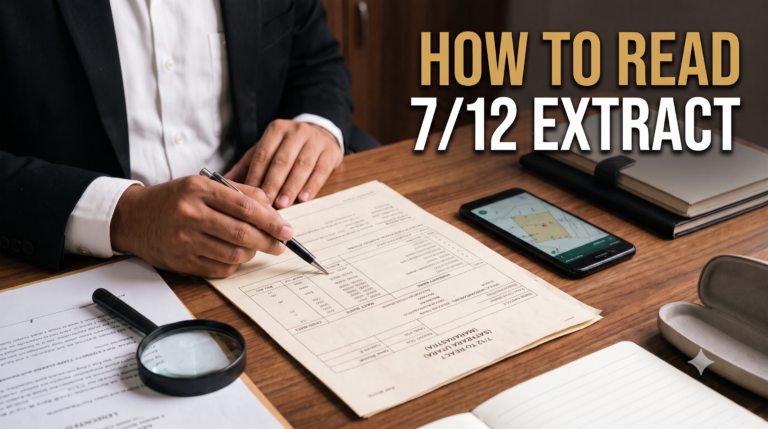
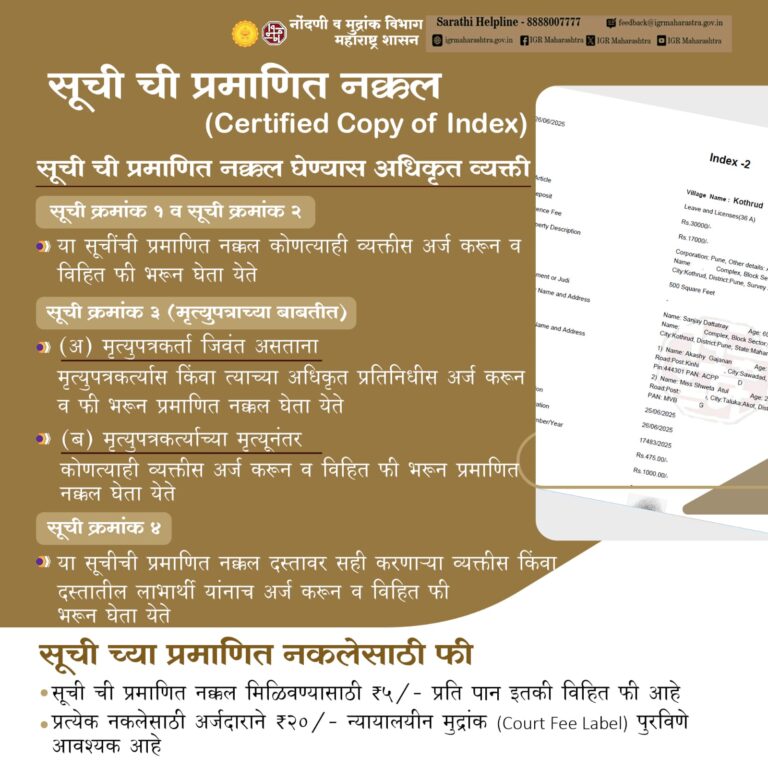
2. The 7/12 Extract (Satbara Utara) and Index II History
This is the fundamental land record in Maharashtra. You need to know who actually owns the land on which the tower is being built.
- What to verify: Is the land in the builder’s name, or are they developing it under a Joint Development Agreement (JDA) with landowners? You need a clear chain of title tracing back at least 30 years to ensure there are no hidden claims from ancestral owners.
3. The N.A. (Non-Agricultural) Order
Much of the developing land in Pune’s fringe areas was previously agricultural land. You cannot build residential towers on farmland without government permission.
- What to verify: Ask for the official N.A. Order issued by the Collector. Ensure the land use is convertedspecifically for “Residential/Commercial” purposes.
4. The Commencement Certificate (CC)
This is the “green signal” to start construction. Building without a CC is illegal.
- What to verify: A project may have a CC only up to the plinth level, or up to a certain floor (e.g., 10th floor). If you are booking a flat on the 18th floor, ask the builder when they expect the further CC. Booking a floor for which plans are not yet sanctioned is risky.
5. Sanctioned Building Plans vs. Brochure Plans
The glossy brochure is marketing; the sanctioned plan is the legal reality.
- What to verify: Demand to see the actual blueprints approved by the PMC (Pune Municipal Corporation), PCMC, or PMRDA. Check if the amenities (swimming pool, clubhouse location) and open spaces shown in the brochure match the government-approved layout. Discrepancies here are major red flags.
6. Encumbrance Certificate (EC)
An EC is evidence that the property is free from any monetary and legal liabilities.
- What to verify: It reveals if the builder has already mortgaged the land to a bank to secure a construction loan. While this is common, you must ensure that the builder will provide a “No Objection Certificate” (NOC) from that bank for the sale of your specific unit.
7. Environmental and Aviation Clearances
In a growing city like Pune, these are increasingly critical.
- What to verify: Large projects require Environmental Clearance from the state ministry. Projects near Lohegaon Airport require an NOC from the Airports Authority of India (AAI) regarding height restrictions. Lack of these can stall a project indefinitely.
8. Property Tax Receipts
- What to verify: Ensure the landowner or developer has paid the up-to-date property taxes to the local municipal body for the land under development.
9. The “Draft Agreement for Sale”
Before you pay, ask for a blank copy of the agreement you will be expected to sign later.
- What to verify: Don’t just look at the price. Look at the cancellation clauses. If you back out, how much do they deduct? If they delay, what penalty do they pay? In Pune, many builder agreements are heavily one-sided until challenged.
10. The Builder’s Title Search Report (TSR)
The builder will proudly show you a thick “Title Search Report” given by their advocate stating the title is clear.
- What to verify: Read the “Disclaimers” section of that report. Remember, that lawyer is paid by the builder to find a way to say Yes. It is always recommended to have an independent lawyer conduct a separate, unbiased title search.
Conclusion: The Cost of Clarity
The sales agent’s job is to create urgency. Your job as a buyer is to apply the brakes and demand clarity.
Collecting these 10 documents is step one. The second, more crucial step, is interpreting the legal language within them. A Commencement Certificate might have conditions attached; a 7/12 extract might show a pending mutation entry.
While the pressure to pay the token is high, the cost of rectifying a legal blunder later is far higher. Undertake due diligence first, so you can sign that cheque with confidence, not just hope.
Disclaimer: This article is for educational purposes only and does not constitute legal advice for a specific transaction. Real estate laws and regulations in Pune are subject to change. Always consult a qualified legal professional to verify documents before making financial commitments.