Buying a Resale Flat in Pune? What is the Process & Stamp Duty?
Buying a resale property in established Pune neighborhoods like Kothrud, Kalyani Nagar, or Aundh is often smarter than waiting years for an under-construction project. You get what you see, the area is developed, and you can move in immediately.
However, legally speaking, buying a resale flat is far more complex than buying from a builder. In a resale transaction, there is no RERA authority to run to if things go wrong. You are relying entirely on the “Title Quality” of the seller.
Here is the comprehensive roadmap to buying a resale flat in Pune safely.
Phase 1: The Verification (Before Paying the Down Payment)
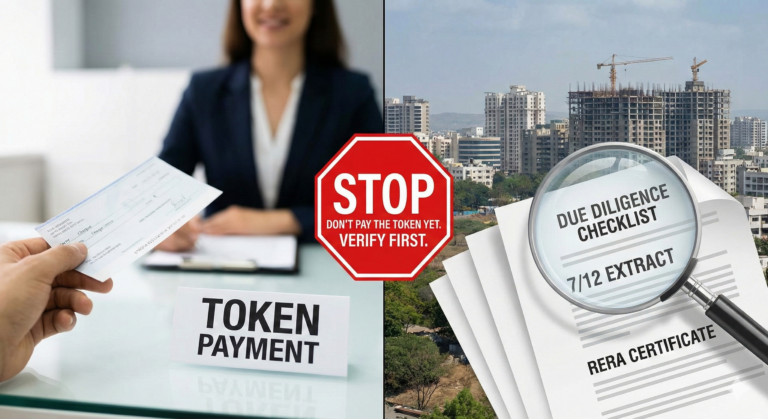
1. The Token & “Isara Chithi” (MOU)
Once you like a flat, the seller will ask for a “Token Amount” (usually ₹50,000 to ₹1 Lakh).
- The Rule: Never pay cash. Always pay via Cheque/UPI.
- The Document: Do not pay based on a handshake. Sign a simple Memorandum of Understanding (MOU) or Isara Chithi. This document should state the final price, the token paid, and the timeline (e.g., “Buyer needs 45 days to arrange loan”).
2. The Title Search (30 Years History)
This is the most critical step. Unlike a builder project where banks do a project-level search, here you are responsible for checking the history.
- You must hire a lawyer to extract the Search Report for the last 30 years from the Sub-Registrar’s office.
- What we look for: Has this flat been sold 3 times before? Are all those “Chain Agreements” available? Is there a pending court case?
3. Society Documents Check
You are not just buying a flat; you are buying a share in a Cooperative Housing Society.
- Share Certificate: Ask to see the original.
- Maintenance Bills: Ensure the seller has no pending dues.
- Society NOC: If you are taking a loan, the bank will require a “No Objection Certificate” from the society.
Phase 2: The Financials & Stamp Duty
Once the Title Search is clear (Green Light), you move to the financials. You need to calculate your “Landed Cost” correctly.
In Pune (PMC Limits), the government charges are calculated on the Agreement Value OR the Ready Reckoner Value (whichever is higher).
Current Stamp Duty Rates in Pune City
| Category of Buyer | Stamp Duty | LBT + Metro Cess | Total Liability |
| Male Buyer | 5% | 1% + 1% | 7% |
| Female Buyer | 4% | 1% + 1% | 6% |
- Registration Fee: 1% of the property value (Capped at maximum ₹30,000).
- TDS (Tax Deducted at Source): If the property value is above ₹50 Lakhs, you (the buyer) must deduct 1% TDS from the payment to the seller and deposit it with the Income Tax Department.
Phase 3: The Execution (Signing the Deal)
4. Handling the Seller’s Existing Loan
If the seller still has a home loan running on the flat:
- You cannot register the deed until their loan is closed.
- The Process: You (or your bank) will pay the “Foreclosure Amount” directly to the seller’s bank. The bank releases the original documents and issues a “No Dues Certificate.” Only then do you proceed to registration.
5. Drafting the Sale Deed
The “Sale Deed” is the final ownership document.
- It must clearly mention the “Chain of Title” (History of all previous owners).
- It must specify when the possession will be handed over (usually on the day of registration or upon final payment).
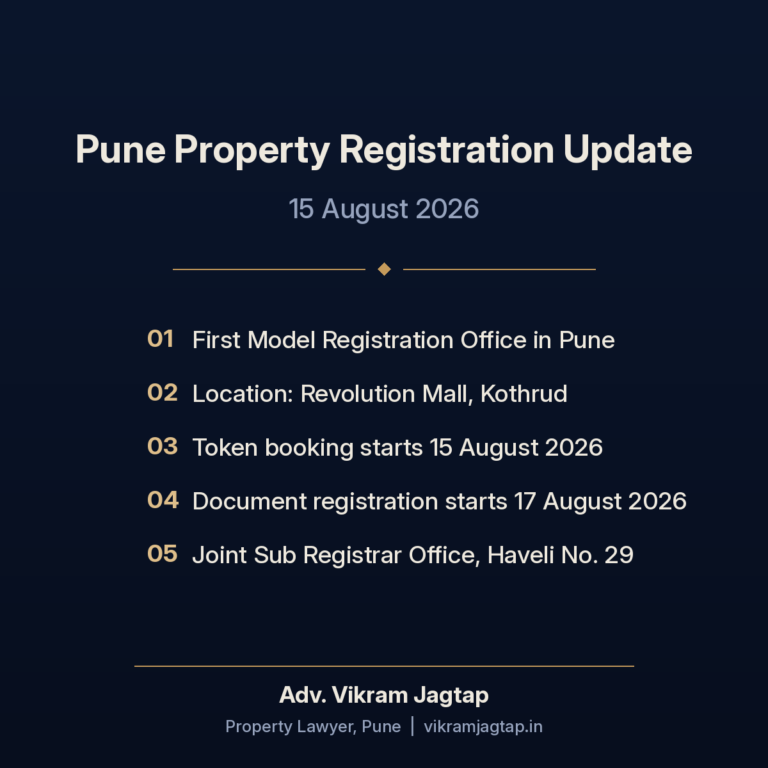
6. Registration at Haveli Office
Both buyer and seller must be present at the Sub-Registrar Office (SRO) for biometric verification.
- Documents needed: Photograph, Adhaar Card, PAN Card, and two witnesses.
- Once the photo is clicked and the deed is signed, the property is officially yours.
Phase 4: Post-Purchase (The “Mutation”)
Many buyers think their job ends at the Registrar’s office. It does not.
7. Society Share Certificate Transfer
Submit the Registered Sale Deed and a “Transfer Form” to the Society Chairman/Secretary.
- They will endorse your name on the back of the Share Certificate. This makes you a legal member of the society.
8. Property Tax Name Change
You must apply to the Pune Municipal Corporation (PMC) citizen facilitation center to change the name on the Property Tax bill. If you fail to do this, the bill will keep coming in the old owner’s name, causing proof-of-address issues later.
The “Chain of Deeds” Warning
In resale deals, the most valuable assets are the Original Previous Agreements.
- If the flat changed hands in 2010, then 2018, and now to you in 2026—you must physically possess the 2010 and 2018 agreements.
- Banks will not give a loan to a future buyer if any link in this chain is missing. Ensure the seller hands over every single scrap of historical paper during the handover.
Disclaimer: This article is for educational purposes regarding the process in Pune city limits (PMC). Charges may vary for properties in PCMC or PMRDA, Grampanchayat limits. Always verify the latest Ready Reckoner rates with a professional.